

The Dollar Sign $: One of the World's Most Famous Symbols
The dollar sign $ is one of the most recognizable symbols globally. It has transcended its role as a mere currency marker to become an icon of wealth, economic power, and capitalism. Despite its widespread fame, the origin of this symbol remains somewhat mysterious, surrounded by several intriguing theories.

Historical evolution of the dollar sign from "Ps" abbreviation to modern form.
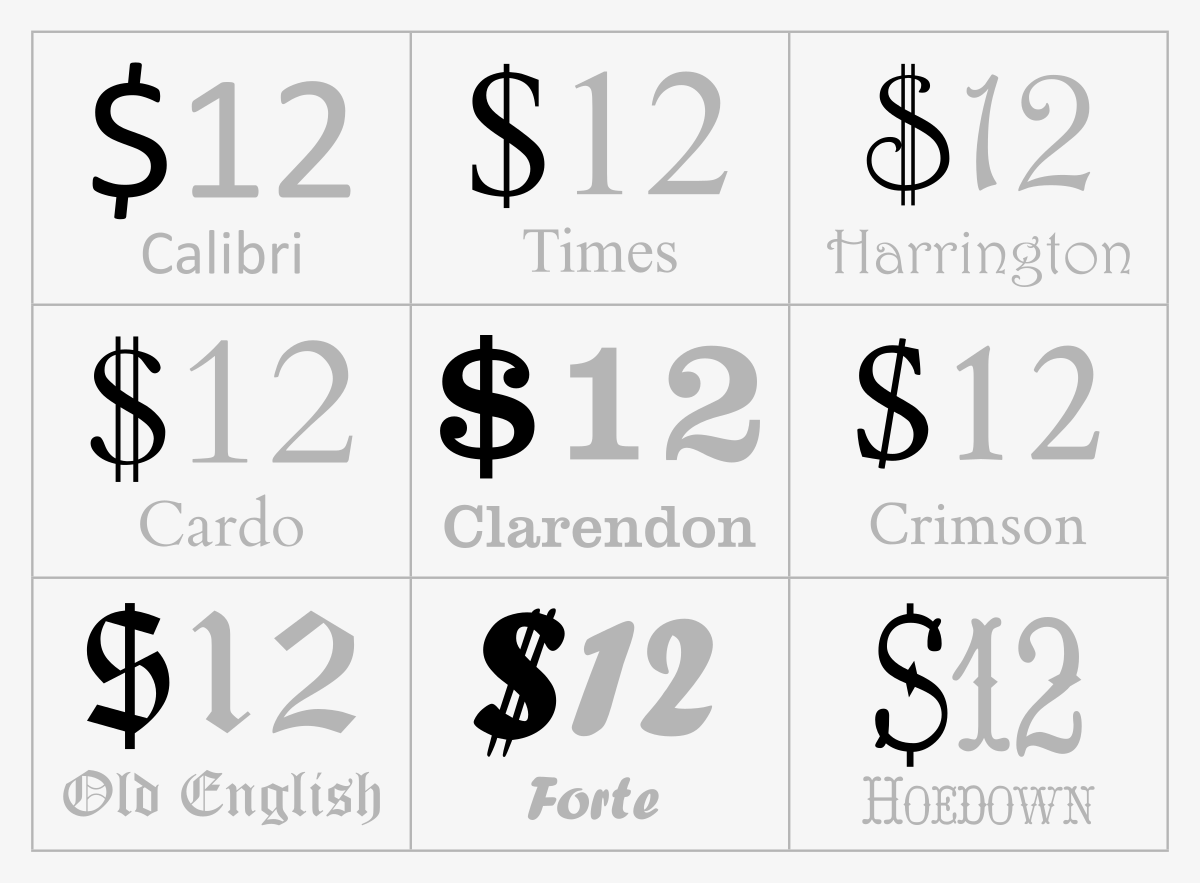
Different typeface variations of the dollar sign, showing one or two vertical strokes.
The Dollar in Art, Literature, and Popular Culture
The symbol's meaning extends beyond finance, often representing human greed and avarice in popular culture. In cartoons, it is frequently drawn on the chests or in the eyes of greedy or fraudulent characters, symbolizing exploitation tied to money.

Cartoon depiction of a greedy businessman with dollar signs in his eyes.

Illustration symbolizing greed with dollar signs replacing eyes.
In literature, the symbol features prominently in Ayn Rand's 1957 novel Atlas Shrugged, where it embodies conflicting moral drives: success and wealth on one hand, evil and greed on the other. According to Rand, the sign is used in caricatures to denote swindlers, yet it also reflects human achievement and creative power.
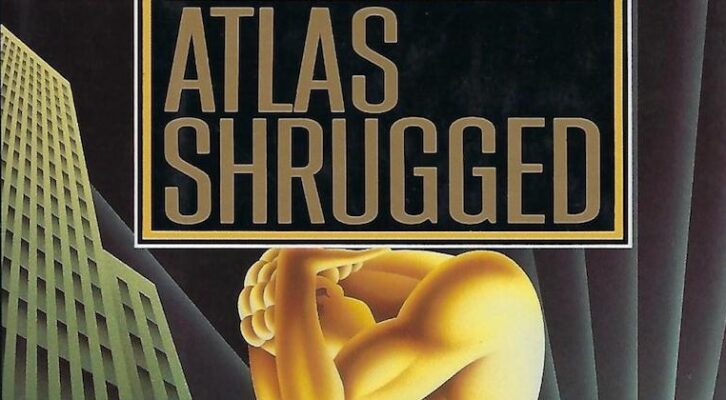
Cover of Ayn Rand's Atlas Shrugged, where the dollar sign plays a symbolic role.
Common Misconceptions About the Symbol's Origin
A widespread idea claims that $ represents the initials of "United States," with the S overlaid by a U (the bottom curve of the U gradually omitted). This theory gained popularity through Ayn Rand, but it is historically inaccurate—the symbol predates the official naming of the "United States" in 1776, when the region was known as the United Colonies.
The Actual Origin
The most accepted theory among historians is that the symbol evolved from the abbreviation "Ps" for "pesos," the Spanish peso being the dominant currency in the Americas during the colonial era. Over time, through repeated handwriting, the letters merged: the curve of the P became a vertical stroke crossing the S.
The Spanish peso, also known as the "piece of eight," was the most circulated coin, and the U.S. dollar was modeled on its weight and value in 1792.
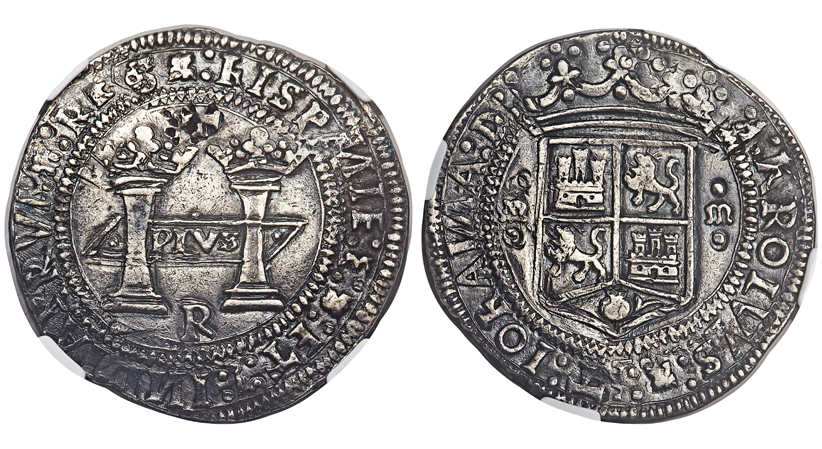
Spanish "pillar dollar" coin featuring the Pillars of Hercules.

Close-up of a historic Spanish pillar dollar.
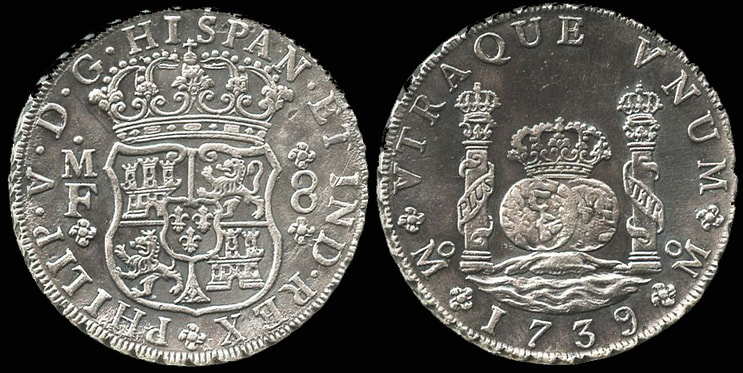
1739 Mexican 8 reales pillar dollar, showing columns and globes.
An alternative theory links the symbol to the Pillars of Hercules (featured on Spanish coins and coat of arms), where the S represents a banner wrapped around two vertical pillars. This explains the double-stroke variant but is less widely accepted.
Another minor idea connects it to the number 8 (for "piece of eight"), but evidence is weak.
Evolution Over Time
Researchers agree that the dollar sign was not deliberately designed but evolved gradually through everyday use in commercial ledgers and bank documents, with minor variations leading to its modern form (often with one stroke, sometimes two).
Today, $ is more than a currency marker—it is a cultural icon reflecting a long journey from colonial coins to a global emblem of economic and social history spanning centuries.
Additional Sources
