
Which Country Builds the Best Electric Cars? Global EV Report
The shift toward sustainable transportation has reshaped the automotive industry faster than anyone predicted. As zero-emission policies take effect globally, millions of drivers now ask a crucial question: which country builds the best electric cars by country?
Determining the true leader in the global EV market is no longer just about horsepower or battery range. It comes down to manufacturing capacity, software integration, battery supply chains, and overall infrastructure. In this comprehensive report, we analyze the top automotive powerhouses to reveal who truly dominates the electric vehicle landscape today.
Table of Contents
- 1. The Global EV Landscape Overview
- 2. China: The Undisputed Manufacturing Heavyweight
- 3. United States: Software Innovation and Brand Power
- 4. Norway: The Gold Standard for EV Adoption
- 5. Germany: Engineering Legacy Meets Electrification
- 6. Comparative Summary: Who Leads What?
- 7. Final Verdict: Who Wins the EV Race?
1. The Global EV Landscape Overview
Electric vehicles are no longer a niche market for early adopters. According to recent data from the International Energy Agency (IEA), global EV sales have eclipsed over 20 million units annually, representing over 20% of all new car sales worldwide.

However, leadership in this sector is fragmented across different global regions:
- Production Volume: Dominated by Asian manufacturing hubs.
- Technological Innovation: Driven primarily by North American software ecosystems.
- Adoption Rate: Led by Northern European infrastructure policies.
2. China: The Undisputed Manufacturing Heavyweight
When analyzing pure production scale and cost-efficiency, China stands in a league of its own. Chinese electric vehicle manufacturers account for nearly 75% of all lithium-ion battery production globally and produce over 60% of all electric cars sold worldwide.
Key Chinese Industry Highlights:
- Top Brands: BYD, NIO, XPeng, Geely, Li Auto
- Main Strengths: Affordable pricing, vertically integrated battery production, rapid iteration cycles.
- Market Position: Unmatched value per dollar across budget and mid-tier segments.
Companies like BYD have redefined affordability without sacrificing quality. By controlling their own battery manufacturing through blade battery technology, Chinese automakers offer feature-rich electric cars at price points that traditional automakers struggle to match.
3. United States: Software Innovation and Brand Power
The United States remains the global center for EV technology, battery management software, and autonomous driving research. While total production volume trails China, American engineering leads in software architecture and performance integration.
Key Advantages of American EVs
- Pioneering Ecosystems: Tesla continues to set the worldwide benchmark for charging reliability with its vast Supercharger network.
- Software-Defined Vehicles: Over-the-air (OTA) updates, full self-driving development, and cutting-edge infotainment systems lead the market.
- Legacy Transformation: Heritage automakers like Ford and General Motors are scaling dedicated platforms for trucks and SUVs.
For drivers seeking long-distance capability, advanced driver-assistance systems, and intuitive software, the U.S. continues to produce some of the best electric cars on the market.
4. Norway: The Gold Standard for EV Adoption
While Norway does not mass-produce its own domestic vehicle brands, no report on electric cars is complete without examining its market. Norway boasts the highest per-capita EV adoption rate in the world, with over 90% of new car sales being fully electric.
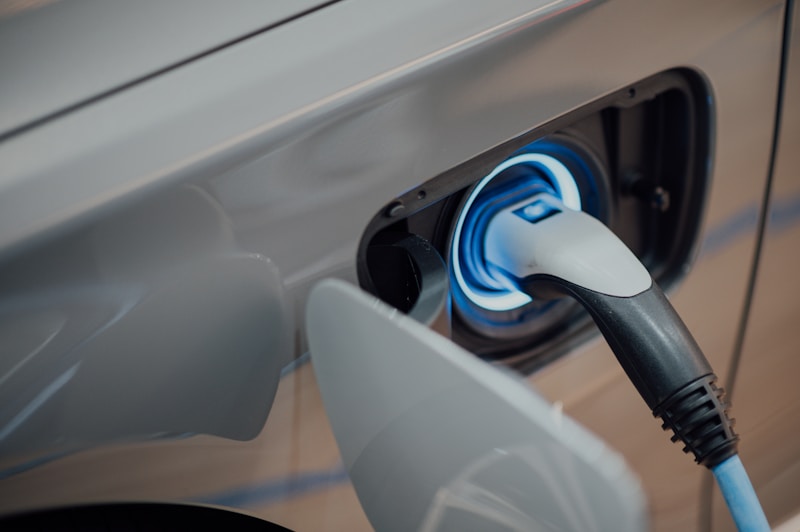
Norway serves as a real-world testing ground for cold-weather battery performance, grid resilience, and fast-charging infrastructure. If an electric car succeeds in Norway's harsh winter conditions, it can perform reliably anywhere on earth.
5. Germany: Engineering Legacy Meets Electrification
Germany has long been synonymous with automotive perfection. Brands like Volkswagen Group, BMW, and Mercedes-Benz have invested tens of billions of euros into transitioning their manufacturing plants toward zero-emission architectures.
Why German Engineering Stands Out
- Driving Dynamics: German EVs excel in high-speed stability, suspension tuning, and precision engineering.
- Build Quality: Premium interior material selection and acoustic isolation remain unmatched in the luxury segment.
- Platform Scalability: Modular platforms allow rapid deployment across luxury sedans and high-performance crossovers.
6. Comparative Summary: Who Leads What?
Different countries lead in distinct areas of the market. The table below highlights how each region compares based on primary industry strengths and top EV brands:
| Country / Region | Primary Strength | Leading Brands | Market Focus |
|---|---|---|---|
| China | Cost Efficiency & Battery Supply | BYD, NIO, Geely | Mass Market & Volume |
| United States | Software & Charging Network | Tesla, Rivian, Lucid | Tech Innovation & Range |
| Germany | Luxury & Chassis Handling | Porsche, BMW, Mercedes | Premium & High Performance |
| Norway | Grid Integration & Infrastructure | Import Dependent | Sustainable Adoption Models |
7. Final Verdict: Who Wins the EV Race?
There is no single country that wins across every metric. If you prioritize affordability, battery innovation, and tech features per dollar, China produces the most competitive vehicles today. If you prioritize software performance, user interface, and seamless fast-charging networks, the United States holds the advantage. Meanwhile, for premium build quality and traditional driving dynamics, Germany remains top tier.
As battery technology advances and global charging grids expand, competition among these nations will ultimately benefit consumers through better driving range, safer battery chemistries, and more accessible pricing worldwide.
What are your thoughts on the global EV transition? Which country's approach matches your personal driving preference? Leave a comment below and share your perspective!